EASA Regulatory Change Impact Review: Finding Affected Manuals, Procedures, And Evidence
Regulatory change is document work. When EASA publishes a new rule, amendment, AMC, GM, FAQ, or template, the hard question is rarely "what does this page say?" The hard question is: which internal manuals, procedures, checklists, matrices, training files, supplier records, and evidence folders are affected?
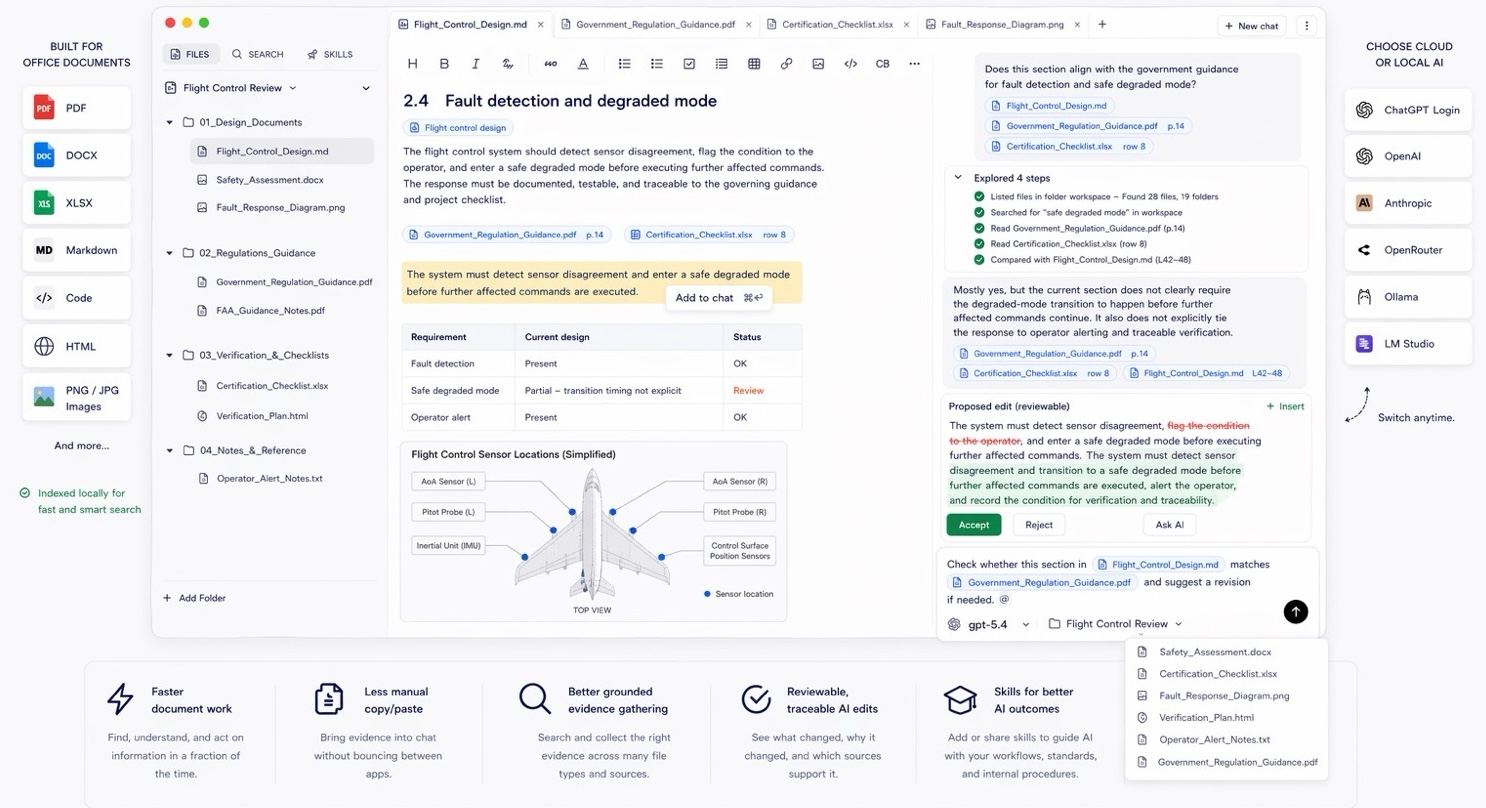
Availability, October 2026: The current Aviation.Bot legacy beta supports EASA source research and chat. V2's combined organisational-document and regulatory-library workflow is in development. The method below can be used manually today; it is not a claim that private-manual review, automatic monitoring or maintained compliance matrices are already available.
Start with one identified source change and one selected manual section, not a request to check an entire organisation. The useful result is a review record and draft action for a qualified owner, not a compliance verdict.
Why Change Impact Gets Messy
An aviation organisation may need to compare a regulatory update against:
- operations manuals
- MOE, CAME, SMS, CMS, ISMS, or training material
- compliance monitoring checklists
- existing compliance matrices
- supplier procedures and evidence files
- internal interpretations and previous audit responses
- draft controlled-document changes
The value is not simply summarising the rule. The value is finding the internal documents that may need review and making the proposed next step traceable. A matching paragraph establishes a candidate connection; it does not establish applicability or prove that the procedure is implemented.
What Goes Into A Change-Impact Review?
Before drafting, collect:
- The exact old and new source editions, provisions and official URLs. Separate a binding rule, AMC, GM, proposal and authority guidance.
- Publication, application and transition dates where the source establishes them. Leave unsupported dates unknown.
- Organisation type, approval scope and relevant activities. A selected library is research scope, not a legal applicability decision.
- The selected controlled manual edition, linked procedure and authorised evidence samples.
- A reviewer and the organisation's own controlled-change process.
Keep a missing source or unknown organisational fact visible. Do not fill that gap with a plausible AI answer.
Worked Example: A Candidate MOE Impact
The Part-145 amendment-to-MOE example uses occurrence-reporting source material as a review starting point. The organisation, manual references and observations below are fictional, not customer results or a regulatory interpretation for your approval.
| Review field | Fictional example |
|---|---|
| Source | Identified Part-145 occurrence-reporting provision and related AMC/GM; reviewer must record exact compared editions and source passage. |
| Organisation context | Maintenance organisation; relevant products, arrangements and approval scope still need confirmation. |
| Manual inspected | Fictional MOE revision 7, section 2.18; linked procedure OP-04 revision 3. |
| Candidate connection | The MOE points to OP-04; OP-04 points to a separate recipient/interface list. |
| Evidence request | Controlled interface list, relevant arrangement and an authorised report sample. None supplied in this example. |
| Draft observation | The document connection is identified, but the relevant interface and its use cannot yet be substantiated. |
| Proposed next step | Ask the procedure owner for the records and confirm applicability before proposing wording. |
| Review status | Needs review; no controlled change approved. |
This is a useful result even without a rewrite. A reviewer might later confirm that the existing procedure already addresses the applicable requirement. Record that decision, its supporting evidence and limits instead of manufacturing a change.
Reusable Review Worksheet
Download the change-impact review worksheet (CSV). It is a blank educational worksheet, not an official form or an automated tool. Use one row per candidate impact, with source and manual editions, evidence, uncertainty, draft action and reviewer decision kept separate.
The MOE matrix article includes a completed fictional record and explains how to keep a proposed observation separate from an accepted decision. Neither download requires an Aviation.Bot account.
A Practical Workspace
Start with a folder that separates official sources from company material:
sources/easa/for official EASA pages, PDFs, Easy Access Rules, and amendment materialcompany/manuals/for controlled manuals and procedurescompany/registers/for risk, compliance, training, and supplier registersoutputs/for generated impact notes and review worklists
Keep a source manifest with canonical URLs, access dates, file versions, and checksums when the source file matters.
Useful public starting points include:
Prompt Pattern
For the planned V2 workflow, ask for a bounded review artifact, not an approval opinion. The prompt requires actual source editions and selected documents; a prompt alone cannot supply missing records or prove source coverage.
Review this identified source change against the selected manual section
and its supporting procedure. Record exact source and document editions.
Separate candidate connections, supplied evidence and missing facts.
Draft one impact table with applicability questions, evidence requests,
proposed actions and a human-review decision field. Do not assert compliance,
invent implementation evidence or edit controlled documents. If an exact
source cannot be inspected, mark that item unresolved.
The useful output should separate:
- source update summary
- applicability assumptions
- direct internal-document matches
- indirect downstream impact
- missing evidence
- proposed controlled-document updates
- reviewer questions
- owners and next actions
Where Aviation.Bot Fits
Current legacy beta: use Aviation.Bot to research supported EASA source material and ask source questions. Do not upload private material on the assumption that the future workflow is already available.
Planned V2 scope: combine selected organisational documents with verified library sources to help a reviewer:
- find candidate references within the selected documents
- inspect the original source and internal document
- group affected documents by workflow owner
- draft reviewable change notes or proposed wording, with unknowns retained
- keep the final approval with accountable humans
This scope is review and draft. It does not promise exhaustive detection, automatic regulatory surveillance, a persistent evidence/approval system or publication of controlled manuals. A reusable task-specific AI skill could define the required inputs, source checks and output format; it would not remove those boundaries. Any time-saving benefit remains a hypothesis until measured in a real reviewed workflow.
Related examples:
- From a Part-145 amendment to an MOE review matrix
- FAA–EASA maintenance approval document review
- EASA Part-IS readiness: finding cybersecurity gaps across aviation manuals, suppliers, risk registers, and training records
- How to find gaps in an EASA SORA application before submission
Sign up on Aviation.Bot to use the current product and stay up to date about upcoming releases. There is no separate early-access list; the V2 workflow described here is not yet publicly available.