EASA Part-145 Requirements and MOE Review: A Source-to-Manual Checklist
An EASA Part-145 maintenance organisation exposition is not one document in isolation. It points into procedures, forms, competence records, supplier controls, audit findings, corrective actions, and training material. That makes MOE review a high-recall document problem.
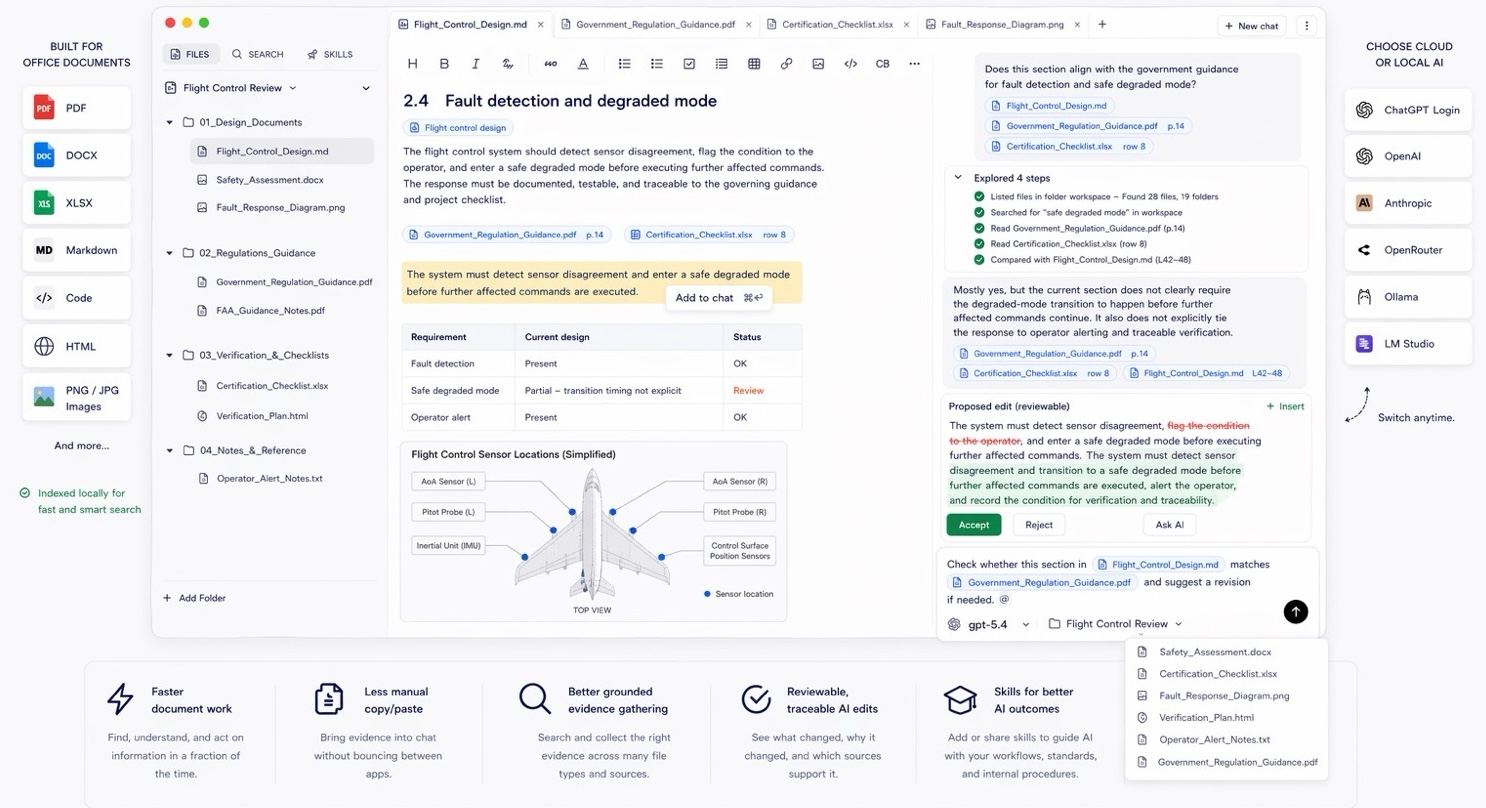
Availability, October 2026: The current legacy beta supports EASA source research and chat. V2's combined organisational-document and regulatory-library workflow is in development. This checklist is usable manually today; private-MOE review and drafting are not advertised as current beta capabilities.
What Is An MOE In Aviation?
A Maintenance Organisation Exposition (MOE) describes how a maintenance organisation implements the requirements relevant to its approval. Reviewing it means checking both the manual and the procedures and evidence it points to. This is not a complete approval checklist or a substitute for applicable rules and competent authority guidance.
Which Part-145 Sources Should An MOE Reviewer Use?
Start with the applicable Part-145 provisions in Regulation (EU) No 1321/2014, relevant AMC/GM and the competent authority's MOE guidance. The Easy Access Rules for Continuing Airworthiness consolidate rules and associated material for navigation. Record the edition and exact provision behind each conclusion, and check later amendments and applicability.
For the exposition itself, inspect 145.A.70 and relevant AMC/GM in that source. Requirements, acceptable means of compliance, guidance and internal procedures have different roles; keep them distinguishable in the matrix.
A Practical MOE Review Checklist
For one selected section:
- Identify the applicable source provision and edition.
- Check the MOE's procedure references and responsible roles.
- Inspect linked procedures, forms and records for currency and consistency.
- Record supporting evidence and unresolved questions.
- Identify possible downstream document or training impacts.
- Assign human review and approval through the organisation's change process.
This is a bounded review method, not an exhaustive Part-145 compliance checklist.
| Connection to review | Material to inspect | Review output |
|---|---|---|
| Selected provision and relevant AMC/GM | MOE section and linked procedure | Exact source-to-section reference and applicability question |
| Process described in the MOE | Procedure, form and authorised sample record | Consistency observation or evidence request |
| Candidate procedure change | Related manual sections and training material | Possible downstream impacts for owners to confirm |
| Proposed action | Change record and approval workflow | Named owner, review status and decision rationale |
See the worked Part-145 amendment-to-MOE matrix for a fictional occurrence-reporting example. Its rows are candidate impacts, not mandatory changes for every maintenance organisation.
Worked Example: A Procedure Reference Without Evidence
In this fictional example, MOE revision 7, section 2.18 points to occurrence-reporting procedure OP-04 revision 3. The reviewer has those documents but not the controlled recipient/interface list or an authorised report sample. These invented document identifiers illustrate the method; they are not recommended MOE numbering or a real finding.
| What is known | What is still missing | Reviewable draft output |
|---|---|---|
| The MOE points to a named procedure. | Exact source editions and applicability confirmation. | Record the connection; leave source/applicability review open. |
| The procedure refers to an interface list. | Current list and the arrangements relevant to this organisation's work. | Request the controlled records; do not invent recipients. |
| A documented process exists. | Authorised sample evidence of how it operates. | State that implementation evidence was not supplied, not that implementation has failed. |
A suitable draft note is:
MOE revision 7, section 2.18 references OP-04 revision 3. The relevant interface records and an authorised report sample were not included in the selected material. Confirm the applicable source editions and organisational scope, then obtain the records before deciding whether any controlled wording needs to change.
The next output is an evidence request, not an automatic rewrite or non-compliance verdict. The accountable reviewer may decide that no change is needed once the supporting material is checked. Keep the evidence and rationale alongside that decision.
Download the blank review worksheet (CSV) or inspect the completed fictional matrix record. These are educational resources, not authority-approved checklists.
What Makes MOE Review Hard
MOE work often requires the reviewer to connect:
- the current MOE section
- EASA Part-145 requirements
- AMC and GM material
- internal maintenance procedures
- compliance monitoring checklists
- competence and authorisation records
- supplier and subcontractor controls
- previous audit findings or authority comments
The risk is not that someone cannot read a clause. The risk is missing a downstream document or accepting a proposed change without source evidence.
A Practical Workspace
For a narrow review, start with one MOE section and the documents that support it.
Example structure:
sources/easa/part-145/company/moe/company/procedures/company/compliance-monitoring/company/training-and-authorisations/outputs/
Useful public starting points include:
- EASA regulations page
- Easy Access Rules for Continuing Airworthiness
- EASA Continuing Airworthiness domain
Prompt Pattern
For the planned workflow, ask for a review artifact, not final controlled text. Supply a verified official source pack until the managed library is available.
Review this selected MOE section and supporting procedure against the
identified Part-145 source editions. Cite the exact passages inspected.
Return candidate requirement-to-manual connections, evidence supplied,
missing inputs, draft observations and reviewer questions. Distinguish
missing evidence from proven non-implementation. Leave applicability and
controlled changes for human approval; do not invent records or declare
the organisation compliant.
A useful output includes:
- source hierarchy
- MOE sections inspected
- related procedures found
- missing or stale references
- proposed compliance-matrix rows for review
- draft wording suggestions
- evidence requests
- human-review questions
What To Avoid
Do not ask any AI tool to approve an MOE, certify compliance, or replace the accountable maintenance or quality function. The tool should make review faster and more complete; it should not collapse source material, internal policy, and authority judgement into one unverified answer.
The planned scope is narrower: research selected material, preserve the evidence trail, and draft a worklist a qualified reviewer can inspect. A task-specific V2 skill could standardise that request and its output, but automatic monitoring, approval tracking and maintained compliance matrices are separate capabilities, not promised here.
Related examples:
- A worked Part-145 amendment-to-MOE review matrix
- EASA Regulatory Change Impact Review
- AI Document Workflows For Aviation Compliance Teams
For an identified amendment and selected internal documents, see Aviation.Bot's regulatory change-impact workflow. The new library workflow is in development; sign up on Aviation.Bot to stay up to date about upcoming releases.